How To Make A Good Book-to-Movie Adaptation
3. Consider the Future
If the film adaptation is going to be based on a series of books, it is important to consider the changes that may need to happen with later films. Do the books gradually get darker as the story unfolds? Do characters or settings change? Will the audience change? If so, the crew and/or cast may need changing or updating too. Take the Harry Potter series for example; seven books were reimagined into eight films by four different directors, each of whom brought their own individual talents and stylistic trademarks into the expanding Harry Potter universe. Chris Columbus directed the first two films, followed by Alfonso Cuarón who showed audiences how much darker the story was about to become via his work in the third movie. Mike Newell directed number four, and David Yates covered the final four films in the franchise, including the darkest of all eight films. Various cast members also needed to be changed or added as time went on and personal circumstances arose, yet the story still flows through all eight films to a level of success rivalled by very few film series whether they be adaptations or originals. Perhaps most importantly, the series’ shift from children’s movie director Chris Columbus – known for Home Alone 1 & 2 – to the director of Children of Men in Cuarón and then David Yates, a filmmaker known for his work on the adult-themed political thriller ‘State of Play’, worked towards accommodating an audience that was growing older, shifting tone from children’s movies to a series of films for young adults.
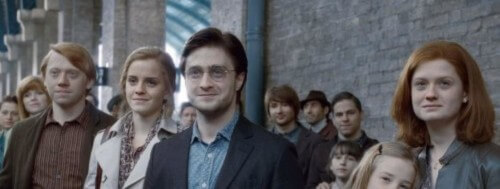
Harry Potter and the Deathly Hallows Part 2 (2011)
4. Listen to the Fans
One of the main things to consider when creating a book-to-film adaptation is the existing fan base. After all, these are people who may know the source material inside out and have a huge passion for it, so they’re at least going to be the movie’s core audience.
Online forums and blogs are flooded daily with fans expressing their wishes for future film adaptations and content they’d love to see on the big screen. Many film crews now will have people involved in the production who are already die hard fans. A recent example of this is director J.J. Abrams’ involvement in the new Star Wars films, whose love and passion for the original trilogy has fuelled his ideas for the new stories. In 2015, Jim Miller from Lionsgate was quoted as saying, “loyalty to the source material is the most important thing” and “to diverge from what made them popular would be a huge mistake”.
It’s not quite a book-to-film adaptation in the traditional sense, but Deadpool is a great example of a film that needed a push from this original material die hard fanbase for it to get the green light from production companies. After years of being in development, Fox finally approved the production of Deadpool after fans began raving about some well-timed leaked footage of director Tim Miller and Ryan Reynolds. After Deadpool’s appearance in X-Men Origins: Wolverine (2009), which was derided by many fans, both Miller and Reynolds wanted to give the character justice and create a better portrayal of the character which was closer to the 1990’s comic books. Deadpool has now become one of Marvel’s most successful film franchises and has raked in more than double the money of X-Men Origins for studio 20th Century Fox.
5. Only Make It If You Know What You’re Getting Into
One of the biggest mistakes that can be made when creating a film adaptation is simply trying too hard. A successful adaptation requires dedicated time, effort and passion; not considering the whole material and just wanting to make a film out of it will likely lead to failure.
During the development and production of A Series of Unfortunate Events, some crew members left the team and the director was replaced, bringing in a new person at the helm who was not familiar with the classic series of books. Apparently he quickly read the first three novels, despite the series containing thirteen books, and was excited to get started; yet the final film contained little of what was written in the novels, and events from all three were mixed up and didn’t make much sense to those who had given their time to the books. The author Daniel Handler, who goes by the alter-ego Lemony Snicket, had written eight drafts of the script for the original director, but was replaced by screenwriter Robert Gordon and decided not to take credit for the screenwriting of the film. Although Handler approved of the changes to his screenplay, he was disappointed that his work was not used after he’d spent so much time on it. A Series of Unfortunate Events is a fine film, yet it doesn’t ring true with the original novels.
The film is not an adaptation, it’s more “loosely based on Handler’s stories”. In 2017 however, a Netflix series of the same name was released, and was developed by the film’s original director Barry Sonnenfeld and author Daniel Handler. The series currently spans over two seasons and eighteen episodes which covers books one to nine, and with a third series in the pipeline to cover the last four books, this adaptation is looking much more dedicated than the film. It is already clear that so much more time, effort and love has gone into this adaptation, and my previous statement on how important it is to include the author in production is so relevant to this work.
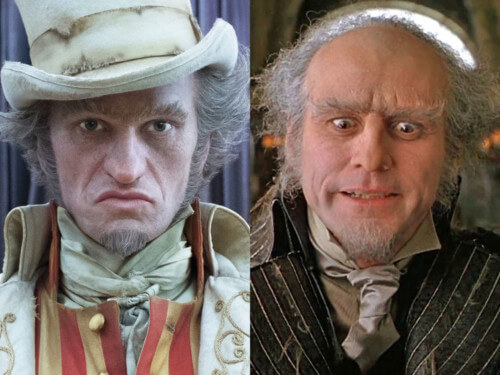
Neil Patrick Harris (left) and Jim Carrey (right) in various A Series of Unfortunate Events adaptations.
Being able to see a world on the big screen that you believed to only exist in your mind is so wondrous, and brings not only the author’s imagination to life, but your own. Here are just a few of my favourite book-to-film adaptations, what are yours?
The Shining (1980)
Submarine (2010)
IT (2017)
The Lovely Bones (2009)
Trainspotting (1996)
Breakfast At Tiffany’s (1961)
Written by Beth Sawdon
The team here at The Film Magazine would like to encourage you to support Beth Sawdon at the following links:
Instagram – @flipendofilms
